
Chain Conveyor Chain
Product Overview
Industrial chain conveyor chains serve as the primary traction and load-bearing elements in continuous mechanical handling systems. Built to withstand high tensile loads, abrasive bulk materials, and severe thermal environments, these chains transfer mechanical energy directly into material displacement across long spans. Each assembly consists of alternating pin-link and roller-link plates, hardened alloy steel pins, bushings, and rollers engineered to engage with drive and idle sprockets without binding or excessive chordal action.
-
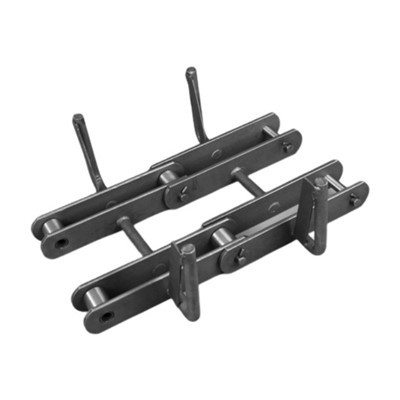 FU Chain Conveyor ChainFU chain conveyor chains are widely used in continuous conveying equipment in industrial production, primarily for transporting powdered, granular, and small lump materials. They feature a chainAdd to Inquiry
-
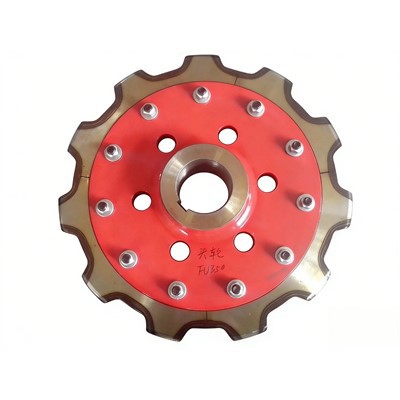 Chain Conveyor PartsConveyor parts are essential components of conveyor systems. They are generally used for routine maintenance and for replacing worn parts to ensure the normal operation of the machinery.Add to Inquiry
-
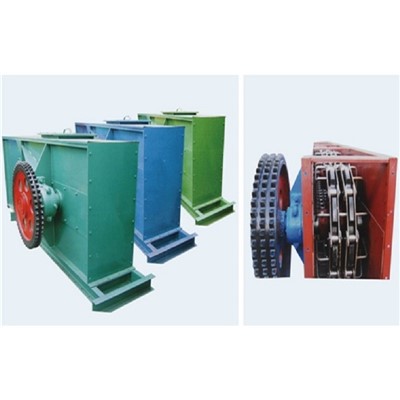 Conveyer MachineThe conveyor machine is industrial conveying equipment that uses chains to pull and carry materials. Widely used in the metallurgy, chemical, and building materials industries, it features highAdd to Inquiry


Types & Configurations
Welded Steel Mill Chain:
Fabricated from heat-treated carbon and alloy steel plates with welded pins and bushings; optimized for high impact shock loading in wood products, pulp, and recycling yards.
Drop-Forged Rivetless Chain:
Features a three-piece drop-forged construction (center link, side bars, pins) with no fasteners, allowing horizontal and vertical flex in overhead and drag conveyor systems.
Heavy-Duty Roller Conveyor Chain:
Precision-built with solid rollers and bush assemblies designed for heavy unit handling, pallet transfer, and incline bulk material transport.
Bushed Chain:
Utilizes solid or split bushings sliding directly on wear strips, specified primarily for drag, flight, and apron conveyors operating in abrasive dust environments.
Materials & Construction
Side Bars & Link Plates:
Medium carbon alloy steel hot-forged or precision laser-cut, blanked, and through-hardened to 35 to 45 HRC to resist fatigue cracking.
Pins:
Alloy steel carburized and case-hardened to 58 to 62 HRC with a deep carbon diffusion layer to maximize wear resistance while maintaining a ductile core.
Bushings:
Seamless cold-drawn alloy steel or sintered powder metallurgy, carburized, hardened, and precision-ground on inner and outer diameters.
Rollers:
Through-hardened or induction-hardened medium carbon steel built to withstand continuous rolling friction against conveyor tracks and sprocket teeth.

Controlled Pitch Elongation: Precision blanking and heat treatment limit initial wear-in stretch to under 0.1 percent of total length during the initial operating hours.
Optimized Bearing Area: Increased pin-to-bushing contact surface area lowers bearing pressure, directly reducing galling and fretting corrosion under high static tension.
Standardized Interchangeability: Manufactured to uniform global industrial dimensional standards, permitting direct drop-in replacement across legacy equipment without sprocket modifications.
Sealed Joint Options: O-ring or self-lubricating sintered bushing variants block abrasive fine particulate from entering the pin-bushing interface in heavy mineral and grain processing lines.
Technical Specifications
|
Series Identifier |
Nominal Pitch |
Ultimate Tensile Strength (UTS) |
Max Working Load |
Pin Diameter |
Average Weight |
|
Series A |
2.609 inches (66.27 mm) |
33,500 lbs (149 kN) |
6,700 lbs |
0.438 inches |
4.2 lbs/ft |
|
Series B |
6.000 inches (152.4 mm) |
85,000 lbs (378 kN) |
17,000 lbs |
0.812 inches |
9.8 lbs/ft |
|
Series C |
2.609 inches (66.27 mm) |
32,000 lbs (142 kN) |
6,400 lbs |
0.440 inches |
3.5 lbs/ft |
|
Series D |
4.000 inches (101.6 mm) |
55,000 lbs (244 kN) |
11,000 lbs |
0.625 inches |
6.5 lbs/ft |
Applications
Cement Plants:
Clinker cooler drag conveyors and raw mill bucket elevators handling abrasive, high-temperature particulate up to 300 deg C.
Bulk Grain Handling:
En-masse chain conveyors moving wheat, corn, and oilseeds at high continuous throughput rates.
Sugar Mills:
Heavy-duty cane knife tables, intermediate carriers, and bagasse conveyors subjected to high shock loads and moisture.
Wood Processing:
Log deck step feeders, bark sorting conveyors, and chip handling drag lines.
Blanking & Piercing: High-tonnage mechanical presses execute precision progressive stamping to maintain hole center tolerances within tight dimensional limits (plus or minus 0.03 mm).
Heat Treatment: Automated atmosphere-controlled continuous furnaces run strict carbon potential protocols to ensure uniform case depth and core hardness.
Assembly & Pre-Stretching: Chains undergo proof-loading at a controlled percentage of rated UTS on a hydraulic test bed to seat pins and eliminate initial slack before packaging.
Inspection Protocol: Dimensional coordinate measuring machine audits verify pitch accuracy over extended sample lengths. Non-destructive magnetic particle inspection screens side bars for micro-cracks post-heat treatment.

Customization & OEM
Attachment Configuration:
Custom welded flights, specialized mounting links, and extended pins configured to precise pitch intervals per engineering blueprints.
Material Upgrades:
Austenitic and martensitic stainless steel variants available for highly corrosive chemical processing and municipal wastewater treatment plants.
Special Surface Finishes:
Specialized electroplating or corrosion-resistant barrier coatings specified for salt-fog and aggressive chemical resistance.
Selection Guide
Calculate Total Tension: Determine the sum of friction resistance, material lifting resistance, and empty chain drag resistance based on conveyor length and operating speed.
Apply Service Factor: Multiply total tension by an application multiplier (1.2 for uniform loads up to 1.5 for heavy shock or continuous daily operations). Ensure the resulting working load does not exceed the maximum working load limit.
Evaluate Environment: Select alloy case-hardened steel for dry or abrasive environments, stainless steel for wet or corrosive chemical exposure, and high-temperature heat-resistant alloys for operating temperatures exceeding 250 deg C.
Verify Sprocket Compatibility: Match chain pitch, roller diameter, and width between inner plates with existing sprocket tooth profiles to prevent premature tooth wear and jump-off.
FAQ
We are one of the most experienced chain conveyor chain manufacturers and suppliers in China since 1999. Please rest assured to buy high quality chain conveyor chain made in China here from our factory. If you have any enquiry about cooperation, please feel free to email us.
chain conveyor chain, FU Chain Conveyor Chain, Chain Conveyor Parts