

Scraper Feeder Chain
Product Overview
The Scraper Feeder Chain is a high-tensile traction and conveying component engineered for continuous, heavy-load bulk material handling. Operating within high-abrasion and high-impact environments—such as coal-fired boilers, cement clinker lines, and mineral processing—this chain integrates precision-forged links with robust scraper flights to push abrasive materials reliably. Designed for direct replacement in existing industrial conveyor systems or custom new builds, it minimizes operational downtime through controlled metallurgy and dimensional accuracy.
-
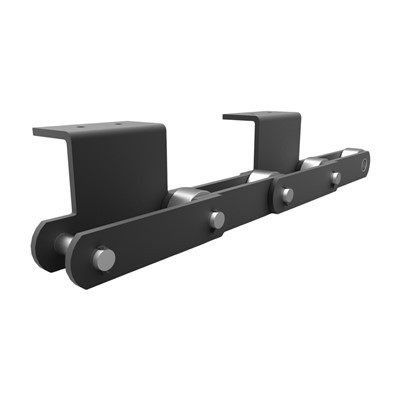 Scraper Feeder ChainsThe scraper feeder chain operates in a cyclical motion to scrape material from the bottom or side of a material pile and convey it along a predetermined path to a designated location, enablingAdd to Inquiry


Types & Configurations
Industrial applications require distinct chain geometries depending on material density, casing dimensions, and load vectors:
Forged Fork-Link Chains (Drop-Forged Rivetless Chains):
Features a pinless or removable-pin drop-forged design allowing multidirectional flexibility, widely utilized in ash handling and biomass feeding.
Welded Steel Scraper Chains:
Constructed from precision-machined sidebars welded with structural steel flights, engineered for high-tension center-pull applications in cement and mining.
Bushed Roller Chains with Flights:
Incorporates hardened rollers running on tracks to reduce friction and power consumption in long-distance horizontal or inclined feeders.
Inboard vs. Outboard Roller Configurations:
Available with rollers positioned inside the chain profile for standard widths or outboard for heavy-load distribution and reduced wear on trough rails.
Materials & Construction
Material selection directly dictates wear resistance and tensile fatigue life. Our chains utilize certified alloy steels processed via controlled thermal paths:
Sidebars / Link Plates:
40Cr / 35CrMo alloy steel, fine-blanked or precision plasma-cut, subjected to through-hardening to achieve a tensile core strength exceeding 850 MPa.
Pins & Bushings:
20CrMnTi or 8620 carburized alloy steel. Case-hardened to HRC 58-62 with a case depth of 1.2-1.8 mm to resist abrasive wear, while maintaining a ductile core to absorb shock loads.
Scraper Flights:
Abrasion-resistant wear plate (400/500 HBW) or structural carbon steel, attached via continuous MIG welding or heavy-duty structural bolting.
Pin Retention:
Heavy-duty cotter pins, circlips, or staked pin heads preventing lateral migration under severe vibration.

High Fatigue Resistance: Controlled shot-peening on link plates introduces compressive residual stresses, raising fatigue limits by up to 20% under cyclic loading.
Optimized Pitch Accuracy: Automated CNC broaching and positioning fixtures maintain strict pitch tolerances (+/- 0.15 mm over 10 pitches), ensuring smooth sprocket tooth engagement and eliminating chordal action shock.
Low-Wear Joint Interface: Pin-to-bushing contact areas are precision-ground to a surface finish of Ra <= 0.8 um, reducing initial break-in wear and chain elongation.
Heavy Shock Absorption: Ductile inner cores prevent brittle fracture when transient blockages occur in the feeder trough.
Technical Specifications
|
Parameter |
Standard Metric Range |
Heavy-Duty / Custom Range |
|
Pitch (P) |
100 mm - 250 mm |
Up to 400 mm |
|
Ultimate Tensile Strength |
250 kN - 800 kN |
Up to 1500 kN |
|
Pin Diameter |
Dia 20 mm - Dia 60 mm |
Up to Dia 90 mm |
|
Bush Material |
Carburized 20CrMnTi |
Alloy Steel (Custom Heat Treatment) |
|
Flight Thickness |
10 mm - 20 mm |
Up to 35 mm (Wear Plate Option) |
|
Operating Temperature |
-20 deg C to +250 deg C |
Up to +400 deg C (High-Temp Alloys) |
|
Lubrication Type |
Grease / Oil Bath / Dry Running |
Maintenance-Free Bushings Available |
Applications
Thermal Power Plants:
Raw coal feed systems, limestone handling in flue gas desulfurization units, and bottom ash removal conveyors.
Cement Plants:
Clinker cooler drag chains, raw meal feed hoppers, and preheater dust extraction systems.
Mining & Quarrying:
Heavy-duty apron feeders, ore transfer chutes, and aggregate extraction lines.
Waste-to-Energy & Biomass:
Municipal solid waste shredder feed lines and woodchip boiler metering bins.calcined petroleum coke, soda ash, and phosphate rock granules.
Manufacturing & Quality Control
Production relies on strict process validation and traceable metallurgical controls:
Forging & Blanking:
Drop-forging presses ranging from 400T to 1600T ensure optimal grain-flow orientation along load paths.
01
Heat Treatment:
Automated, computer-controlled atmosphere multi-purpose furnaces ensure uniform carbon potential and surface hardness, verified via optical metallographic testing.
02
Dimensional Inspection:
Coordinate measuring machines and laser pitch-measuring benches inspect total chain assembly length under a pre-load equal to 10% of ultimate tensile strength.
03
Non-Destructive Testing:
Magnetic particle inspection is applied to critical pins and welded flight attachments to screen for sub-surface micro-cracks.
04
Traceability:
Production runs maintain strict lot traceability, with raw material test reports and inspection documentation provided upon shipment.
05
We engineer replacement and custom scraper chains matching specific legacy footprints or unique installation envelopes:
Reverse Engineering: Send a worn chain sample or detailed engineering drawings; our technical team verifies pitch, pin diameter, and attachment interfaces.
Material Upgrades: Substitution of standard carbon steel with stainless steel for corrosive chemical environments, or heat-resistant alloys for high-temperature clinker handling.
Special Attachments: Custom flight profiles (L-type, T-type, or box-type scrapers) welded or bolted to exact trough widths.

Selection Guide
To ensure correct chain selection and maximize service life, evaluate the following operational parameters:
Calculate Working Load:
Determine maximum material static load plus frictional resistance of the trough (F = (W_material + W_chain) x L x f). Ensure the chain's Ultimate Tensile Strength provides a minimum safety factor of 5:1.
Verify Sprocket Geometry:
Old sprockets wear in tandem with old chains. Installing a new chain on a severely worn sprocket causes rapid pitch mismatch and tooth jumping. Inspect sprocket tooth profile; replace sprockets if tooth flaking or hooking exceeds 10% wear.
Environmental Factors:
Specify hardened wear-resistant scrapers if handling highly abrasive silica-laden clinker or slag. Select sealed/greased pins if operating in dry, dusty environments without regular lubrication access.
Frequently Asked Questions
We are one of the most experienced scraper feeder chain manufacturers and suppliers in China since 1999. Please rest assured to buy high quality scraper feeder chain made in China here from our factory. If you have any enquiry about cooperation, please feel free to email us.
scraper feeder chain, Scraper Feeder Chains